
Does Hate Speech Fuel Violence?
Examining the Connection Between Antisemitic Rhetoric and Violent Acts


Candace Owens recently had a debate on Piers Morgan with Rabbi Shi Bak and she said probably the most anti-Semitic thing that I've ever heard her say in my entire life. If you didn't catch it, if you weren't paying attention close enough, then it would not have been obvious to you. But I'm going to show you why what she said is so destructive. Not only is it destructive towards the Jewish people, but it's also destructive towards Christian people as well. Pierce Morgan asked Candace Owens a question.
"As a human watching his behavior today, do you see any Saving Grace as a human being?"
"You know, I think I will pray for him. I will pray for his conversion into Christianity."
So, according to Candace Owens, the only saving grace for a Jewish rabbi is that he should convert to Christianity. I want to share with you Judaism's approach to Christianity and how they view it.
It’s worth noting that Candace Owens doesn’t represent the views of all Christians. In fact, it seems she speaks for a very small minority within Christianity, and primarily for herself. Her rhetoric and positions may resonate with a particular fringe group, but they don’t reflect the broader perspectives of the Christian community as a whole. Many Christians would likely distance themselves from the views she expresses, seeing them as not representative of their faith or values.
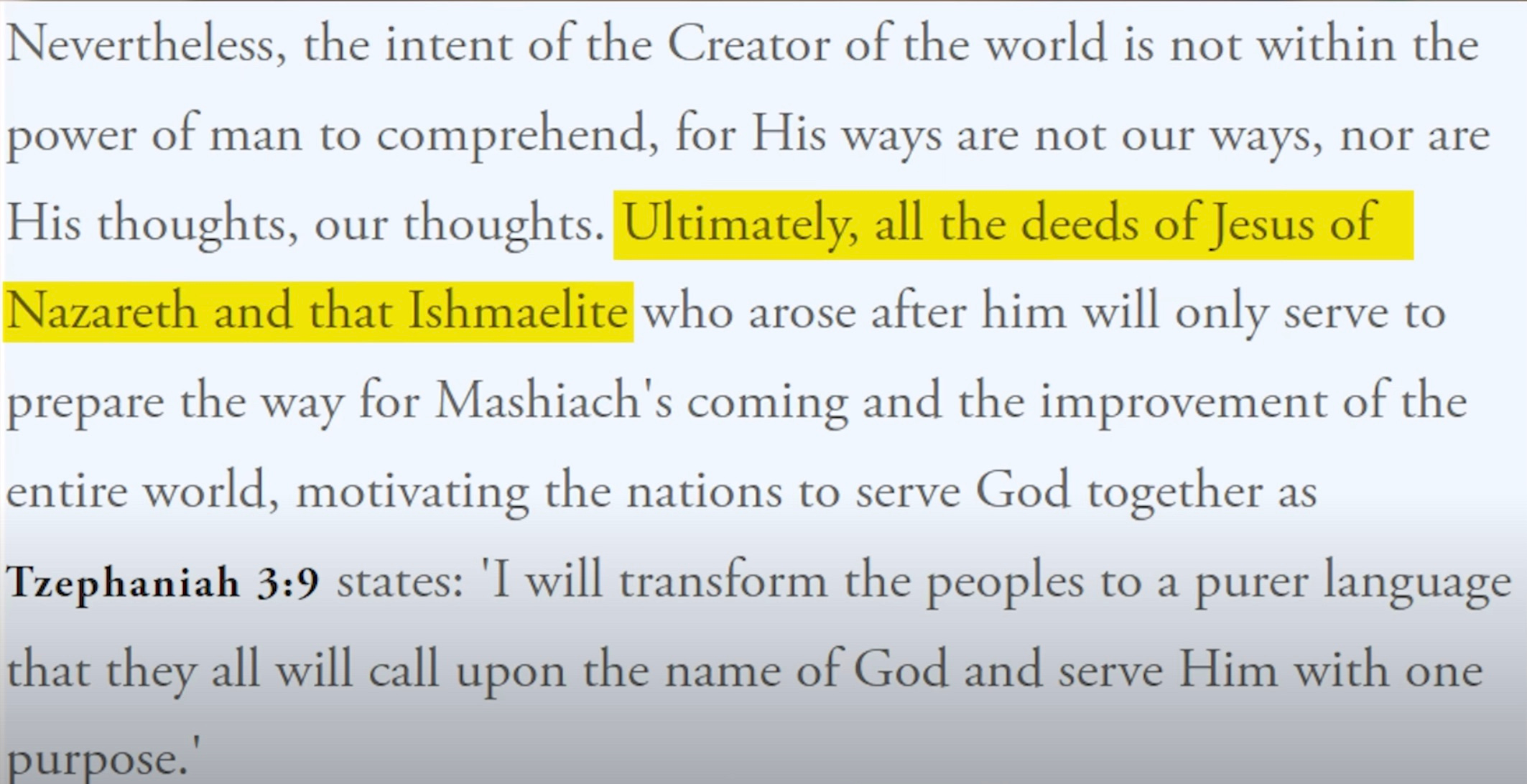
So here is the Jewish approach to Christianity. This is a text called the Mishneh Torah; it's written by a man named Maimonides, otherwise known as the Rambam, over a thousand years ago. It says, “Ultimately, the deeds of Jesus of Nazareth and the Ishmaelite (referring to Muhammad)..."
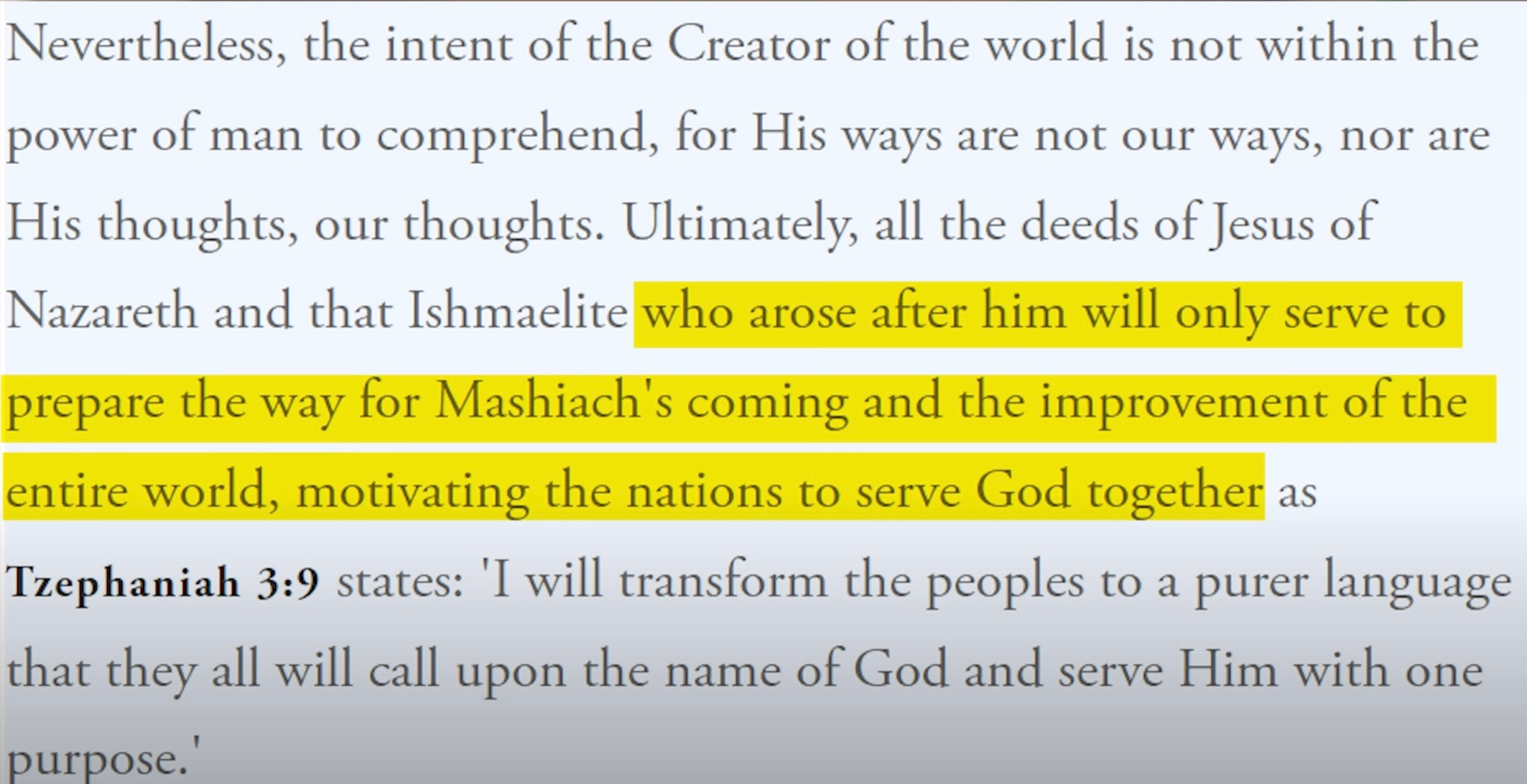
"...who arose after him—only serve to prepare a way for the Messiah to come and to improve the entire world, motivating the nations to serve God together."
In essence, Judaism doesn't advocate for Christians or Muslims—or anyone else—to convert to Judaism. Rather, it acknowledges the merits within these other religions and views them as positive forces, contributing to the ultimate goal of bringing the world closer to serving God. This stands in stark contrast to Candace Owens' perspective, which implies that the only way for Jews to find salvation is by converting to Christianity.
This approach is deeply problematic and represents the core of her anti-Semitism. It’s not rooted in political issues or conspiracy theories, but rather in the fact that Jewish people remain Jews and do not convert to Christianity.
Judaism, on the other hand, highlights the redeeming qualities of other faiths, recognizing that their contributions are helping prepare the world for a time when, as described in the Mishneh Torah, all people will serve God together. The notion is not that others must convert to be accepted, but that their actions are shaping the world for a shared future of divine service.
This is where things become concerning. Maimonides speaks directly about Christianity—not Jesus, but the religion's historical relationship with Judaism in medieval times—not in the present day, as Candace Owens tries to bring it back to.
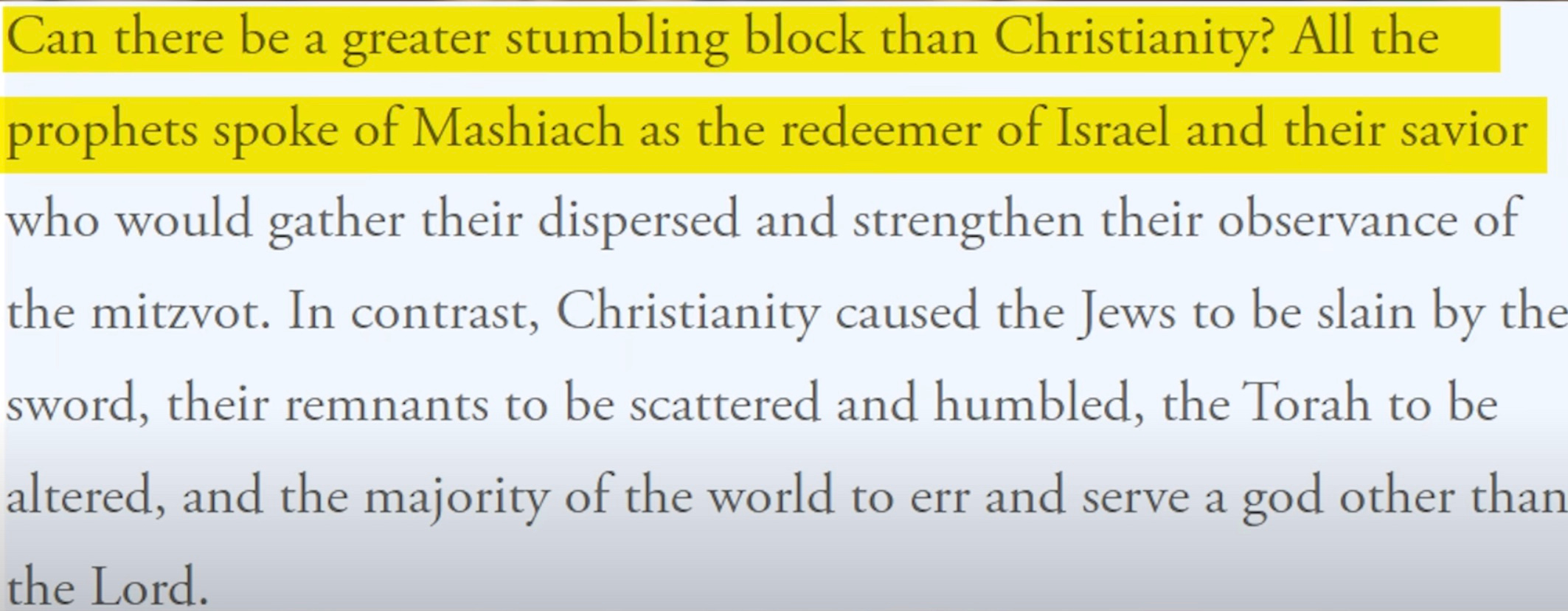
He writes, “Can there be a greater stumbling block than Christianity? All the prophets of the Messiah and the Redeemer of Israel, and all their savior
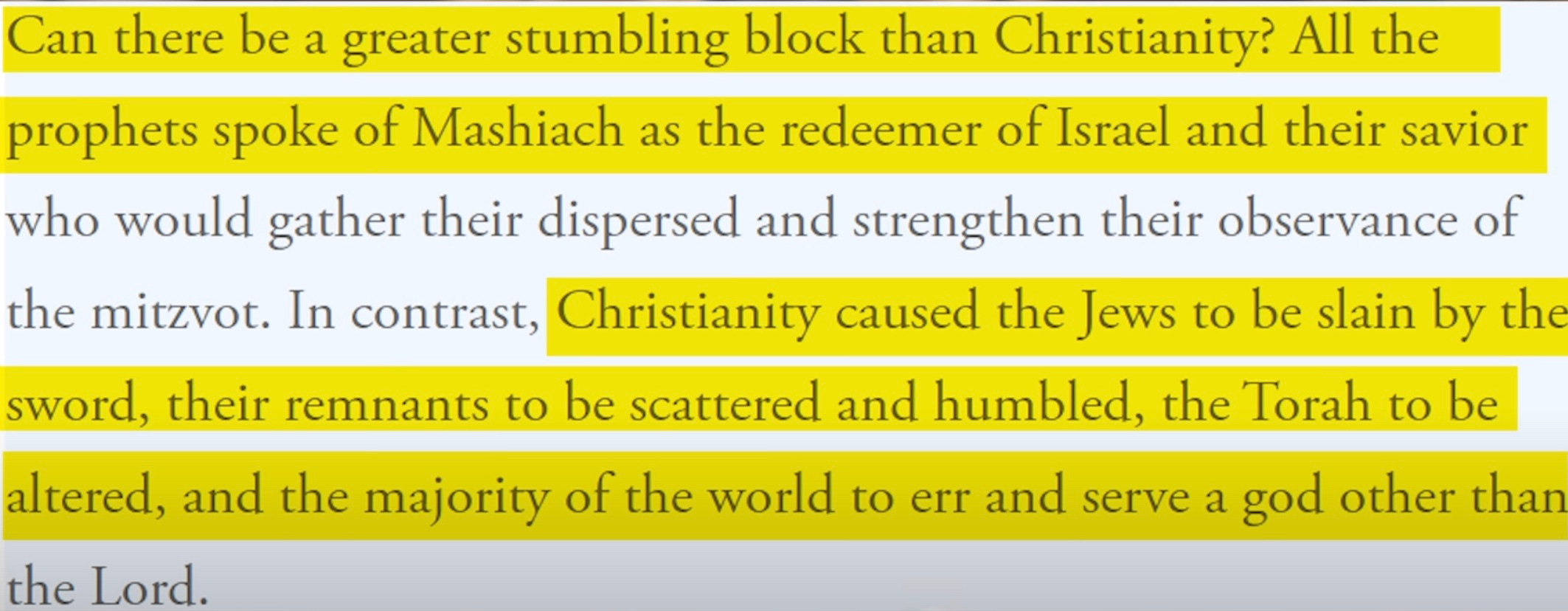
In contrast, written in medieval times and not in 2024 like Candace Owens’ views, Maimonides states, “Christianity caused the bloodshed of many Jews by the sword and led to their scattering across the world. It distorted the Torah and caused many to err, leading to attacks on Jews during the Crusades.”
When Candace Owens asserts that the only way for Jews to find grace is to convert, I believe she is addressing all of world Jewry, not just Rabbi Shmuel. Her statement, “I’ll pray for you,” might seem benign today, but centuries ago, it translated to, “If you don’t convert, your entire community is at risk.”
So you have to be very careful. You're treading on a very, very thin line. Christianity has evolved and come so far since then, and what we have to do as people—and this is the Jewish approach. And remember, Jesus was Jewish and every single religion stems as an offshoot from Judaism. So let me give you from the source: the Jewish approach is that
each religion has its part and has its role in bringing the world to its ultimate perfection.
And when we start trying to force other people to convert, that is when hatred ensues, and it starts with words and it ultimately ends in actions. Candace Owens, you have to be very careful, very careful in your rhetoric. You're getting more dangerous by the day. Part of me thinks she’s just that stupid, the other part of me thinks she’s being funded by spies elsewhere to promote pro russian content lol BUT BEFORE I LOSE CREDIBILITY LETS GO OVER all of it lol LOVE YOU
If you’re feeling lost, don’t worry. This piece, which I’ve spent the past week developing, will address the questions you might have. Why does the medieval perspective matter? How can we be certain about Candace Owens’ intentions? I hope this article will clarify these issues for you.
Antisemitism, a persistent blight on human history, continues to thrive despite the relentless efforts to eradicate it. Though society has progressed in many ways, this form of hatred remains as potent today as it was during the most harrowing moments of the past. In the digital era, antisemitism often disguises itself as intellectual debate or a misguided defense of free speech. Under the pretense of open dialogue, some challenge why conversations about Jews or Judaism are limited, exposing a concerning fixation on antisemitic rhetoric that perpetuates harmful stereotypes.
The rise of social media has become a breeding ground for conspiracy theories and a disturbing revival of Holocaust denial. Platforms once thought to be neutral are now replete with the notorious “Protocols of the Elders of Zion,” showing how antisemitism adapts and persists in new forms. It's as though this prejudice is a resilient virus, evolving and finding new vectors to spread its toxicity.
This modern iteration of antisemitism is frequently propagated by those who either lack the motivation to engage in genuine research or are too apathetic to care, dismissing their ignorance as trivial. This indifference is a heavy burden, as the constant battle against misconceptions and misinformation is both exhausting and unending.
One can hope for a more informed public, but the reality is that many remain disengaged from the truth. While ignorance can be forgivable, willful ignorance—especially in the face of new information—is not. This apathy not only perpetuates antisemitic myths but also contributes to the violence that often follows.
To combat this pervasive issue, one must rely on credible sources. My visits to the Holocaust Museum have been eye-opening, providing invaluable insights into the horrors of the Holocaust. The museum’s website offers a wealth of accurate information supported by powerful archived footage that brings this dark chapter to life. A crucial lesson from these visits is the perpetrators' deliberate destruction of evidence—a tactic with several insidious purposes: preventing accountability, facilitating denial, controlling the narrative, creating psychological impact, and minimizing emotional scars. This strategy of erasure has been disturbingly effective, as evidenced by the persistent denial and distortion in public discourse today.
If you encounter individuals online or in person who contribute to the perpetuation of abuse against minority groups, recognizing these elements will help ensure that you do not appear misguided in discussions about antisemitism and historical atrocities. Acknowledging the deliberate efforts to erase evidence and the ongoing evolution of antisemitic sentiment will better equip you to confront and challenge these pernicious beliefs effectively. Whatever you do, dont be that guy.
